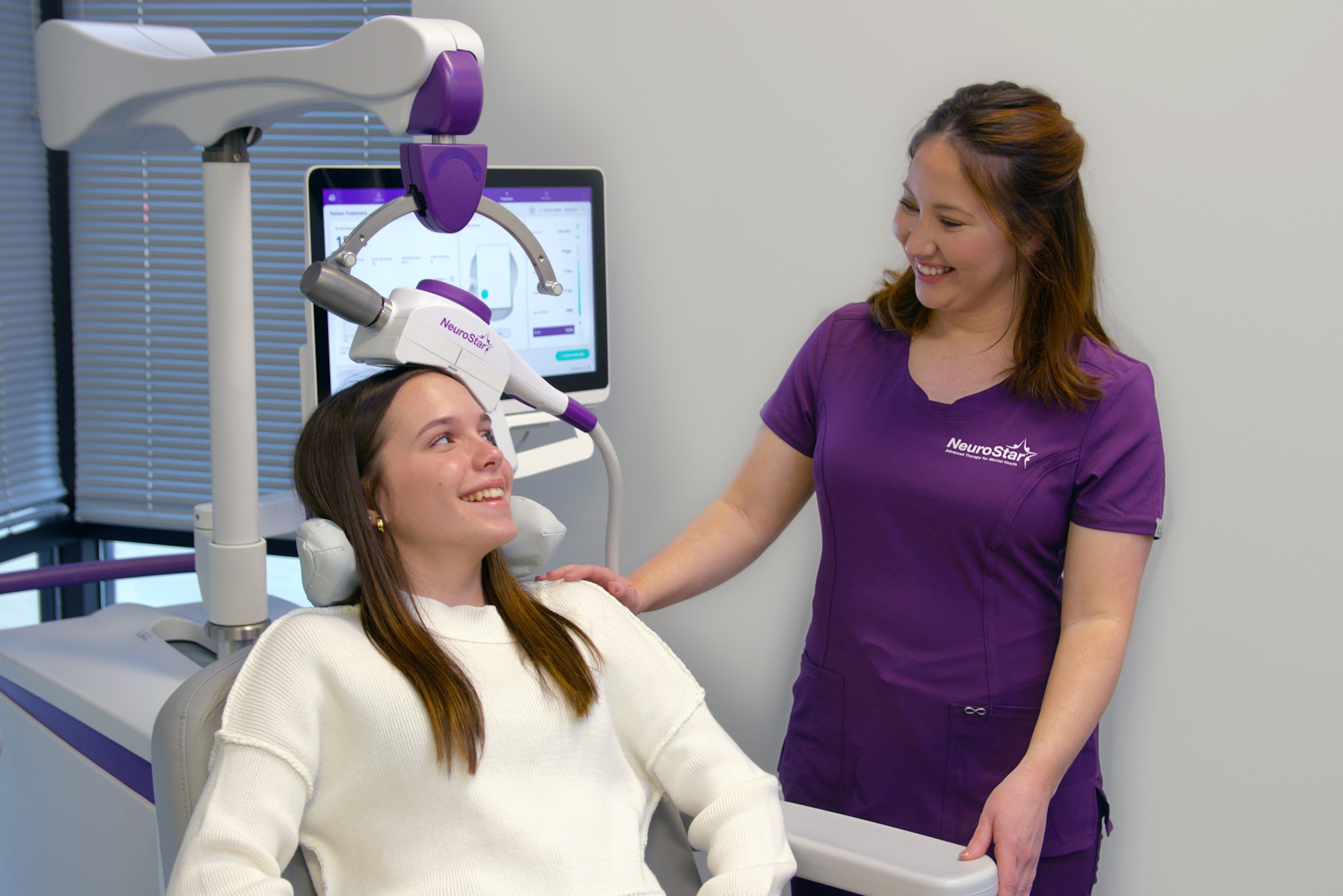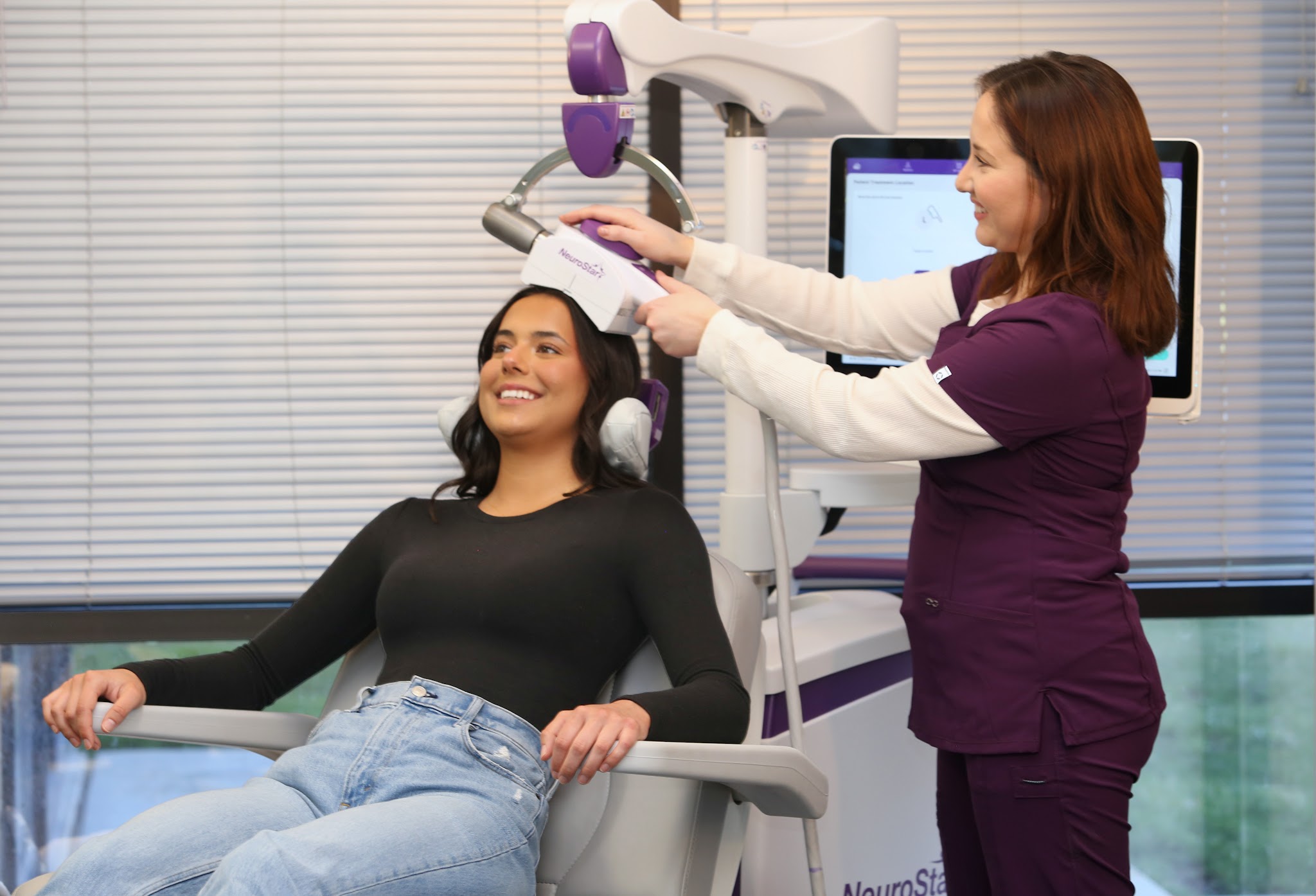
What is the most common side effect reported during TMS? Headache is the most common side effect of transcranial magnetic stimulation (TMS). In most cases, it’s mild, short-lived, and becomes less noticeable as treatment continues. Some people also experience temporary scalp discomfort or brief facial muscle twitching during a session. These reactions are well documented in clinical research and treatment guidelines. Keep reading to learn why these side effects happen, what’s considered normal, and when to seek medical advice.
Key Takeaways
- Headache is the most common, usually mild TMS side effect.
- Scalp discomfort and fatigue usually improve with TMS.
- FDA-cleared TMS is safe; serious side effects are rare.
Is Headache the Most Common TMS Side Effect?
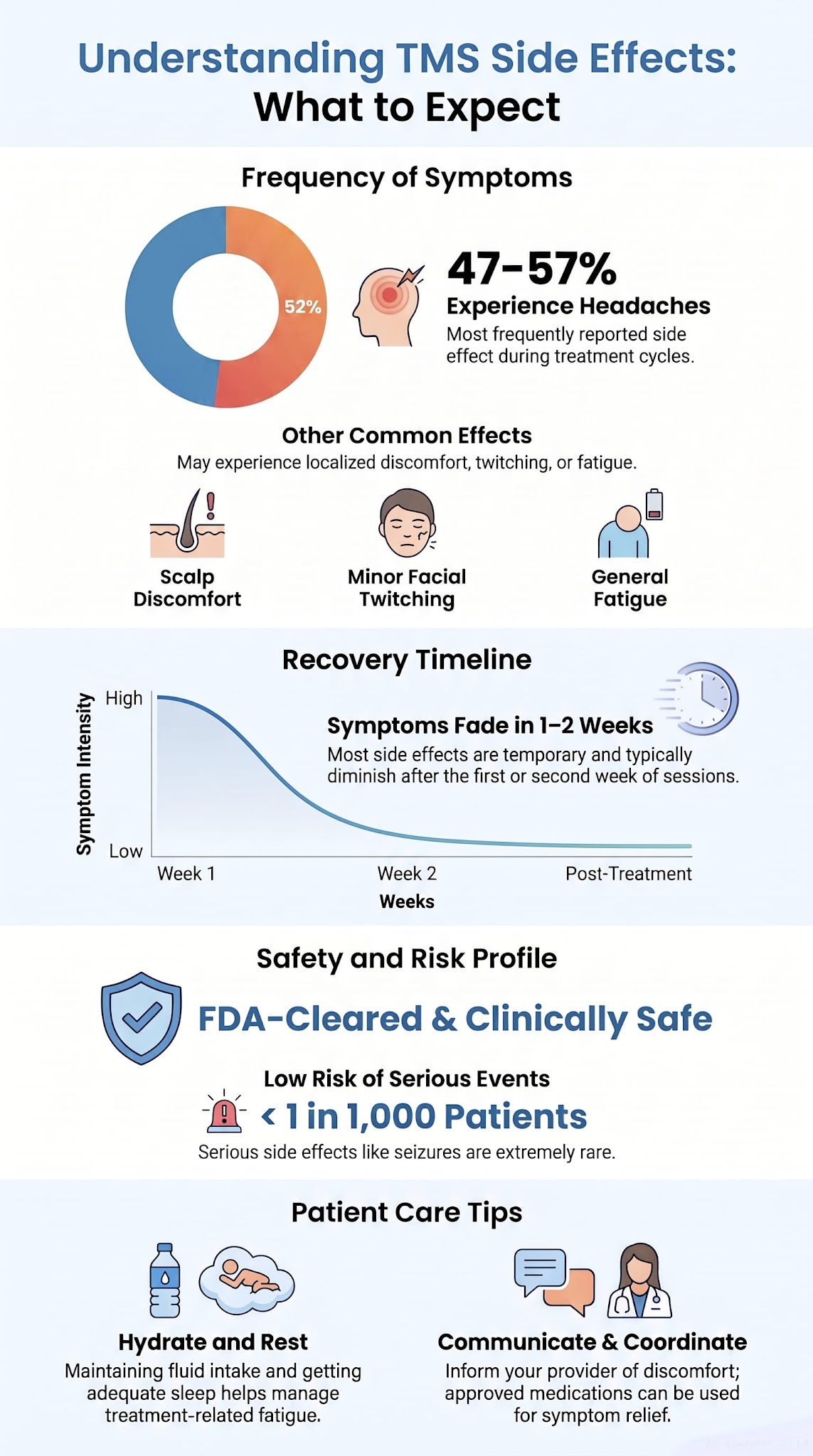
Yes, it is. Out of all the side effects doctors track during TMS (Transcranial Magnetic Stimulation), headache shows up the most.
This isn’t just a guess; it’s backed by real studies and treatment guidelines. Headaches happen more than scalp soreness, facial twitching, or feeling worn out. The National Institute of Mental Health says these symptoms are usually temporary and aren’t a sign that something’s wrong with your brain.
Research from medRxiv shows the following:
“A 2025 meta-analysis of 141 controlled trials involving 4,299 participants found that headache was the most frequently reported side effect, occurring in 57 studies with active TMS compared to 32 studies with sham treatment. The analysis concluded that most reported side effects were mild, self-limiting, and did not require participants to stop treatment.” – medRxiv
That’s a clue that the pain is probably coming from muscles near the treatment area, not from stimulating the brain itself.
Symptoms Patients Report Most Often
- Mild or short headaches
- Soreness where the coil sits on your scalp
- Facial twitching or muscle contractions
- Feeling tired or temporarily worn out
- A localized pressure feeling on your scalp during the session
Good news: these symptoms usually calm down after your first week or two of treatment. That makes it a lot easier to stick with your sessions.
Why Do Headaches Happen?
Before the magnetic pulses reach your brain, they have to pass through your scalp and skull first. Along the way, they can stir up the muscles and nerves sitting right under your skin.
In my clinical practice, I explain it to patients like this: imagine a strong, focused vibration traveling through a surface — it will naturally activate everything in its path before reaching its target. That’s exactly what happens during TMS.
What is Actually Happening Under the Coil
- Muscle Contractions: The muscles around your temple and jaw contract slightly with each pulse, which causes that tapping sensation. It’s not dangerous; it’s just physics.
- The Tension Effect: This localized muscle tapping essentially mimics a mild tension headache, often combined with temporary scalp tenderness or a feeling of pressure.
- Nerve Stimulation: The rapid magnetic pulses stimulate superficial nerves under the skin, which can cause a brief, sharp sensation that quickly subsides.
Over the years, I’ve found that patients who understand why they feel these sensations are much more likely to tolerate them well. Knowledge really does reduce anxiety. When I sit with a patient during their first session and explain each sensation as it happens, “that twitch you just felt is your temporalis muscle, completely normal”, their comfort level improves immediately.
One important thing to know: this type of headache has nothing to do with brain injury or disease. It’s really just a temporary reaction from the muscles and nerves near where the coil sits. Patients considering candidates for NeuroStar TMS therapy are often reassured to learn that these early symptoms tend to be strongest during the first few sessions and ease up significantly from there.
Most of the time, it comes down to muscles and nerves, not the brain.
Here’s how it works: the magnetic pulses pass through your scalp and skull without harming any tissue. While they’re reaching the part of your brain being treated, they also bump into nearby muscles that control your face and scalp. That’s why some people feel scalp pain, tenderness, or a bit of facial twitching while they’re being treated.
The Journal of Clinical Psychiatry and the Mayo Clinic have both looked into this, and they describe these headaches as mild and short-lived. Most respond well to basic stuff, like resting or taking an over-the-counter pain reliever. And for most patients, headaches get less intense over time as their body adjusts to the treatment.
Headaches are just one part of the experience. Here’s what else you might feel during a session.
What Happens During Treatment?
A few sensations are totally normal and nothing to worry about. Because the magnetic field is highly localized, what you feel depends entirely on the placement of the treatment coil.
Common Physical Sensations
- A tapping or knocking feeling: This is the physical sensation of the magnetic pulse firing under the coil.
- Quick twitches in your face: The magnetic field can briefly stimulate facial muscles, particularly around the eyes or mouth.
- Soreness on the scalp: Mild tenderness where the coil directly touches your skin is very common during the first week.
- Referred discomfort: You might feel a slight ache in your jaw, ear, or teeth depending on exactly where the coil is placed.
Managing Discomfort During Your Session
- Fading symptoms: Most of these feelings fade within a few minutes after your session ends.
- Real-time adjustments: If something feels too uncomfortable, just say so. Your provider can usually adjust the coil position or lower the intensity a little without making the treatment any less effective.
- Building tolerance: Your scalp desensitizes over time, meaning the treatment will feel noticeably lighter after the first few days, which is a common part of TMS therapy in Weston.
Pro Tip: Don’t tough it out in silence. Speak up early if something feels uncomfortable. A small adjustment now can make the rest of your treatment a lot easier.
What Other Side Effects Are Common During TMS?
Headaches get most of the attention. But they’re far from the only thing patients notice during treatment.
Here’s the reassuring part. Most of these side effects are mild and fade on their own.
In a recent analysis by Brain Stimulation, researchers reported the following:
“A 2025 systematic review published in Brain Stimulation reported the prevalence of headache or scalp pain at 84.4 per 1,000 patients receiving active TMS, with no significant difference between active and sham conditions (p=0.55). The study also found that the prevalence of serious adverse effects, including seizure, did not differ between active and sham TMS.” – Brain Stimulation
Facial twitching happens too, as does mild skin irritation. And tiredness is common, especially after a session.
| Side Effect | What It Feels Like | Does It Get Better? |
| Headache | Mild pressure or tension type pain | Yes |
| Scalp discomfort | Soreness or pressure under the coil | Yes |
| Facial twitching | Quick muscle jumps near the treatment spot | Yes |
| Fatigue | Feeling worn out after your session | Usually |
| Jaw soreness | Temporary ache while the coil runs | Yes |
| Lightheadedness | Brief, mild dizziness | Usually |
| Nausea | Rare. Doesn’t stick around | Usually |
What Influences Your Experience?
No two patients experience this the exact same way. The intensity and type of side effects you feel depend on several distinct factors:
- Coil placement: Exactly where the coil sits on your head matters.
- Stimulation strength: The specific power settings required for your prescription.
- Individual tolerance: Your unique pain threshold and sensitivity.
- The condition treated: What health issue you’re actually targeting plays a major role.
Does Scalp Discomfort Feel Different From a Headache?
Yes. They’re not the same thing at all.
Scalp discomfort stays in one place, right under the coil. A headache spreads out. It covers more of your head, sometimes the whole forehead.
Most patients describe the scalp feeling as tapping, pressure, or just soreness right where the coil touches down. A headache after your session feels more familiar, honestly, like an everyday tension headache that settles across your forehead or temples. Mayo Clinic notes that both tend to ease up the longer treatment continues.
Knowing this difference actually matters. It helps you separate a normal part of treatment from something that might need a closer look.
Spotting the Differences
One thing worth remembering: headaches tend to hit after treatment wraps up. Scalp discomfort, on the other hand, happens while the coil is actually running.
The Breakdown on Headaches:
- Sensation: Mild pressure across the forehead or temples.
- Timing: Shows up after your session; can last anywhere from a few minutes to a few hours.
- Relief: Often improves with over-the-counter pain medicine, if your doctor says that’s fine.
The Breakdown on Scalp Discomfort:
- Sensation: Tenderness and soreness at the exact treatment spot right under the coil.
- Feeling: A brief tingling sensation, almost like static.
- Timing: Sensitivity that fades not long after the session ends.
Most patients find that both of these issues improve with time. Usually, after the first few sessions, the body adjusts and the discomfort becomes barely noticeable.
How Long Do TMS Side Effects Usually Last?
For most people, side effects ease up within the first one to two weeks of treatment, although the exact time frame for a TMS session and the overall treatment schedule can vary depending on the individual’s care plan.
As you go through more sessions, things like headaches, scalp soreness, and facial twitching tend to fade. The National Institute of Mental Health notes that most side effects are mild and go away on their own, which is part of why TMS has a good safety track record overall. Comfort usually improves little by little as treatment continues.
| Treatment Stage | Common Side Effects | What Most Patients Can Expect |
| First Few Sessions | Headache, scalp tenderness, facial twitching | Symptoms are usually mild and temporary as the body adjusts to treatment. |
| Week 1 | Mild fatigue, neck soreness, scalp discomfort | Most side effects begin to decrease in intensity. |
| Week 2 and Beyond | Occasional mild headache or scalp sensitivity | Most patients report significantly improved comfort and fewer side effects. |
| After Completing Treatment | Side effects are uncommon | Temporary treatment-related symptoms typically resolve completely. |
Managing the Adjustment Period
Very few patients stop TMS because of side effects, under 5% by most estimates. That tells us most discomfort can be managed without ending treatment.
Everyone heals a little differently, though. To help navigate those first couple of weeks, keep the following in mind:
- Patience is key: Some people feel completely fine after just a few sessions, while others take a bit longer to adjust.
- Settings can change: If the tapping feels too intense, your technician can make small adjustments to the stimulation settings to keep you comfortable.
- Open communication: Letting your care team know exactly what you are feeling allows them to fine-tune your sessions in real-time.
Which Side Effects Are Normal, and Which Are Warning Signs?
Most side effects are expected and go away on their own. But a few symptoms mean you should get checked out right away.
The common side effects come from the scalp muscles and nerves near the treatment area reacting to stimulation, not from any harm to the brain itself. Serious problems are rare when TMS is given the way it’s meant to be, using FDA-cleared devices and standard clinical guidelines. Eligibility for treatment is also determined through a comprehensive evaluation that includes factors such as medical history and cut off age for TMS considerations.
| Normal Side Effects | Seek Medical Attention If You Experience |
| Mild headache | Seizure |
| Temporary scalp soreness | Loss of consciousness or fainting |
| Facial muscle twitching | Persistent confusion |
| Mild jaw discomfort | Vision changes |
| Temporary fatigue | Ongoing weakness or numbness |
| Brief lightheadedness | Symptoms that worsen instead of improving |
Seizures are rare with TMS, especially when providers follow standard screening steps and treatment settings, according to the National Institute of Mental Health.
What Do Clinical Studies Say About TMS Side Effects?
Extensive clinical research, including studies by the National Institute of Mental Health, confirms that TMS is a safe and effective non-invasive treatment when administered properly.
The most common side effect is a headache. Some people also experience soreness on their scalp where the device sits, or minor muscle twitching during the session. Major health organizations like the National Institute of Mental Health and the Mayo Clinic have studied this closely and agree that serious complications are exceptionally rare.
Key Research Findings
- Headaches are the most common complaint: Most are mild, localized, and fade quickly after the session ends.
- Discomfort decreases over time: Your scalp adjusts, and the sensation usually gets much better as treatment goes on.
- High completion rates: Very few people stop treatment because of side effects.
- Low seizure risk: Seizures are very rare, occurring in less than 1 in 1,000 patients, when clinics follow standard safety protocols.
Harvard Medical School notes that TMS has become a trusted option for people with depression that hasn’t improved with other treatments, largely because it works well without serious risks for most people. The National Institute of Mental Health agrees it is a solid choice, though they emphasize that doctors must properly screen patients and monitor them throughout the process.
What Do Patients Actually Say About TMS Side Effects?

What real patients share in everyday life matches the clinical research pretty well, though everyone experiences the sensation a little differently.
In online support groups, people frequently talk about managing headaches during the first week, navigating a sore scalp, and dealing with temporary fatigue. A common discussion topic is whether this tiredness stems directly from the TMS or from the depression itself. Regardless of the source, it usually resolves within the first few weeks.
Common Real-World Patient Experiences
- Initial headaches: Experiencing mild head pain that typically fades completely after the first week of adjustments.
- Tapping or pressure: Feeling a strange but manageable “pecking” or pressure sensation on the scalp during active sessions.
- Temporary fatigue: Feeling more tired than normal directly after a treatment session.
- Quick muscle twitches: Catching fast, involuntary facial or jaw twitches while the machine is actively pulsing.
- Mild dizziness: Occasionally feeling slightly lightheaded or nauseous immediately afterward.
A Quick Reminder: While hearing from other patients is incredibly helpful, online stories aren’t a substitute for professional medical advice. If a symptom bothers you, won’t go away, or seems to get worse, always flag it with the doctor treating you.
How Can You Reduce Headaches During TMS?

A few simple habits can help, and you won’t need to stop treatment to use them.
Headaches are common in the first week or two of Transcranial Magnetic Stimulation (TMS). Your scalp and head are just getting used to the magnetic pulses. The good news is there’s a lot you can do to feel better.
Quick Tips to Prep and Cope:
- Hydrate and Fuel: Drink enough water and eat a light meal or snack before you come in. Don’t show up on an empty stomach.
- Rest Up: Sleep well the night before, especially during the early stages of your treatment course.
- Speak Up: Tell your technician right away if something hurts during the session. They can adjust the coil or settings if one spot feels too sensitive.
- Medicate Safely: Ask your doctor if it’s okay to take an over-the-counter pain reliever like Tylenol or Advil before your appointment.
- Protect Your Ears: Keep your earplugs in securely the whole time to shield your hearing from the clicking sound.
Give it time. Most people notice the headaches get milder, or go away completely, after just a few sessions.
Should Headaches Make You Stop TMS?
No, not usually. A headache by itself isn’t a reason to quit.
Headaches are one of the most common side effects of TMS, so your care team expects them. They’ll usually have you continue treatment while they check in on how you’re feeling. For most patients, things get easier as the brain adjusts.
When to Call Your Doctor Immediately:
- Worsening Pain: The headaches keep getting worse instead of better, especially if they persist for more than 72 hours.
- No Improvement: Nothing improves after several sessions. This may indicate a need for coil repositioning or an intensity adjustment.
- Neurological Changes: New symptoms show up, like numbness, trouble talking, or vision changes.
- Severe Symptoms: You feel dizzy, confused, or experience any loss of consciousness. These require emergency medical attention.
What We Do When a Patient Reports Severe Discomfort
In our clinic, we don’t just tell patients to “push through.” We follow a clear protocol to keep you safe and comfortable:
- The 7/10 Rule: If a headache is rated 7/10 or higher on the pain scale, we pause the session immediately.
- Adjustments: We reposition the coil and reduce the stimulation intensity by 5-10% before re-evaluating.
- Next Steps: If the discomfort persists despite adjustments, we reschedule your session and consult directly with our medical director.
Our Promise: No patient is ever forced to continue an uncomfortable session.
Don’t stop TMS on your own. Quitting too soon could mean missing the therapeutic benefits that come from finishing the full course of treatment, but your safety and comfort will always remain our top priority.
How Weston Psychological Associates Supports Comfortable TMS Treatment

Starting TMS can feel like a big unknown. Our job is to make it feel less that way.
Weston Psychological Associates offers NeuroStar TMS, which is FDA-cleared to treat major depressive disorder, OCD, and anxious depression. A lot of our patients come to us after trying antidepressants that didn’t quite do the job.
Important Safety Note: TMS isn’t for everyone. If you have certain implanted medical devices or metal in your head/neck, for instance, it may not be safe for you. Your provider will thoroughly go over your medical history before anything starts.
What Treatment Actually Looks Like Here
None of our approaches are complicated. We just think people do better with treatment when they know what to expect and feel like someone’s paying attention.
Our Patient Comfort Commitments:
- Proactive Education: We explain exactly what’s going to happen before your first session, not after.
- Constant Communication: We ask how you’re doing at every single visit, not just once in a while.
- Real-Time Adjustments: If something feels uncomfortable or sensitive during stimulation, we adjust it immediately.
- Consistent Check-Ins: You will hear from us regularly throughout your entire treatment course, not just when there’s a problem.
- Radical Transparency: We are completely upfront about what is a normal, expected side effect and what is not.
Understanding TMS Side Effects Before Beginning Treatment
Headache is the most commonly reported side effect during TMS, followed by scalp discomfort, facial muscle twitching, and temporary fatigue. These symptoms are usually mild and often improve as treatment continues. The good news is that serious complications are rare when FDA-cleared TMS is provided with proper patient screening and established safety protocols.
If you’re looking for a supportive next step, Weston Psychological Associates can help you explore whether NeuroStar FDA-cleared TMS is the right fit for your needs. Don’t let questions about side effects keep you from getting the care you deserve. Visit Weston Psychological Associates today to schedule a consultation and learn more about your treatment options.
FAQ
Can repeated TMS sessions make headaches worse over time?
Most people who experience a headache during treatment find that it becomes less frequent after several therapy sessions. A mild headache, transient headache, or post-treatment headache is one of the most common short-term side effects. If headaches continue or become more painful, your healthcare provider can recommend headache relief, suggest over-the-counter pain relief, or make a treatment adjustment to improve patient comfort.
Why does my face twitch during TMS treatment?
Facial muscle twitching, facial twitching, or brief muscle contractions can occur because the magnetic coil stimulates nearby nerves and muscles during noninvasive brain stimulation. This type of facial nerve stimulation is usually temporary and does not indicate a problem with the treatment. If the twitching feels uncomfortable, your healthcare provider can adjust the stimulation intensity to improve treatment tolerability.
Is scalp pain during TMS something to worry about?
Some people experience scalp discomfort, scalp pain, treatment site pain, application site pain, stimulation site discomfort, scalp tenderness, or pressure on the scalp during treatment. These types of localized pain are usually mild and temporary. If pain at the stimulation site, scalp sensitivity, or scalp irritation continues between appointments or becomes more severe, you should tell your healthcare provider so they can make appropriate treatment adjustments.
Can TMS cause dizziness or nausea after treatment?
Some people experience lightheadedness, dizziness, nausea, or fatigue after treatment. These common TMS symptoms are generally mild adverse effects that improve during post-session recovery. Drinking enough water, resting, and following your provider’s instructions may help reduce these symptoms. Contact your healthcare provider if the symptoms become severe, last longer than expected, or interfere with your daily activities.
How is discomfort reduced during TMS treatment?
Healthcare providers can improve treatment tolerance by adjusting the stimulation intensity and the position of the magnetic coil. Wearing earplugs during TMS provides hearing protection and helps reduce noise-related discomfort. These adjustments can also reduce neck pain, jaw discomfort, facial pain, eye discomfort, ear discomfort, tooth pain, tingling sensation, tapping sensation, knocking sensation, and the magnetic pulse sensation.
The established clinical safety profile of FDA-cleared TMS supports its use as an outpatient treatment for depression therapy and other mental health treatment needs, even though some people experience rTMS side effects, deep TMS side effects, brain stimulation side effects, treatment-related discomfort, common adverse events, transient side effects, or other depression treatment side effects associated with brain stimulation therapy, neurostimulation therapy, and cortical stimulation.