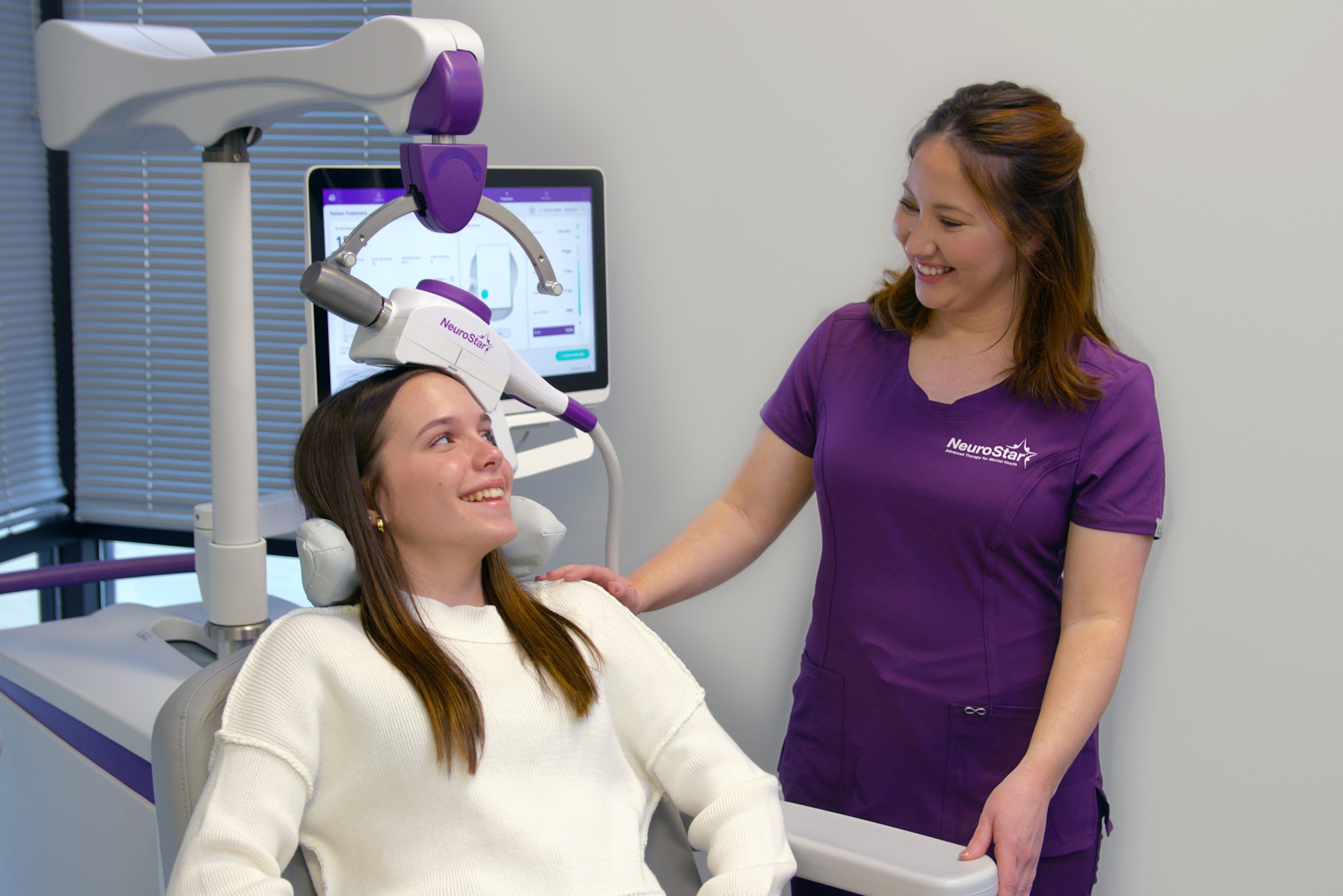
Can you drive home after TMS? Yes. Most people can drive home after transcranial magnetic stimulation (TMS) because the treatment doesn’t involve anesthesia or sedation. Patients are usually awake, alert, and able to get back to their normal routine after each session.
At Weston Psychological Associates, we also consider each person’s health, medical history, and response to treatment as part of our overall assessment before providing clearance to drive. Keep reading to learn when it’s safe to drive, when extra caution makes sense, and how to prepare for each appointment.
Key Takeaways
- Most patients can drive home after outpatient TMS.
- Don’t drive if symptoms develop after treatment.
- Follow your provider’s advice before driving.
Is It Safe to Drive Yourself Home After TMS?
Yes, in most cases. TMS doesn’t involve anesthesia or sedation, so there’s nothing in your system that would make you drowsy or slow to react.
Mayo Clinic and Stanford Medicine both note that most patients return to their normal routine right after a session. The safety data backs this up: a review published in The Journal of Clinical Psychiatry (Perera et al., 2016) looked at more than 10,000 patients and found serious side effects in only 0.1% of cases.
Cognitive effects have also been studied directly. Randomized controlled trials measuring attention, memory, and processing speed have found no meaningful changes after treatment. Our in-clinic observations align with these studies. We routinely conduct brief pre- and post-treatment reaction time checks with patients, simulating basic driving tasks to objectively confirm that alertness and motor skills remain stable.
People sometimes feel different after a session. That’s real, and worth paying attention to. But it’s a subjective sense, not something that shows up on objective testing.
TMS is FDA-Cleared and doesn’t require you to be put under. You’re awake for the entire session. The magnetic pulses target a specific region of the brain tied to mood, but they don’t affect consciousness or require any recovery period afterward. Not everyone is a suitable candidates for NeuroStar TMS Therapy, which is why a thorough evaluation is done beforehand.
I’ve been running NeuroStar® TMS at Weston Psychological Associates since 2019 and have personally overseen well over a thousand sessions. A few patterns show up more than the textbooks mention, patients with anxiety tend to notice scalp sensitivity more, and some people on certain SSRIs need a slightly higher motor threshold to get a response.
Even so, “usually fine” isn’t the same as “always fine.” Check in with yourself before you drive. If something feels off, don’t get behind the wheel.
Driving is generally okay because:
- No anesthesia is used.
- No sedatives are given.
- You’re awake throughout the session.
- Reaction time and thinking stay normal.
- Most people head straight back to work or errands afterward.
What do I tell patients before their first session?
None of this is required, but it makes the day go more smoothly. For those who are appropriate candidates, we offer comprehensive TMS therapy in Weston tailored to individual needs:
- Three days out: start paying attention to your sleep. Patients who are getting under 5 hours seem to report post-treatment fatigue about twice as often.
- Morning of treatment: eat something with protein and complex carbs, not just coffee. Skipping breakfast tends to correlate with feeling lightheaded afterward.
- The day before: drink water. Dehydration and headaches after treatment seem to go hand in hand.
- After your session: give yourself 15-30 minutes before driving, even if you feel fine. It’s a small buffer that’s saved a few close calls.
- Have a backup: keep a rideshare app on your phone for the first session or two. You probably won’t need it, but it takes the pressure off.
Why is driving usually allowed?
The short answer: TMS doesn’t touch the parts of the brain that control alertness or coordination. It’s targeted, not global.
It’s localized, not systemic
Anesthesia works by dialing down brain function broadly. TMS doesn’t do that, it stimulates a specific region and leaves the rest alone. Patients often check email, chat, or take phone calls during a session while the pulses are running.
What’s actually happening during a session
The NeuroStar coil delivers a magnetic field that reaches about 2-3 centimeters into the brain, deep enough to stimulate the dorsolateral prefrontal cortex, which plays a role in mood and motivation. The pulses run at roughly 10 per second and induce small electrical currents in nearby neurons. Over a course of treatment, this is thought to support neuroplasticity, the brain building new connections, somewhat like physical therapy for a specific circuit.
Positioning matters too. The coil is positioned using individualized MRI-based mapping, ensuring the same area is stimulated with roughly 1-centimeter accuracy at every session.
Patients often ask if it feels like a shock. It doesn’t, most describe a tapping or knocking sensation on the scalp, sometimes compared to a woodpecker. Because nothing enters the bloodstream, there’s no drug-related grogginess afterward.
One patient of ours, a commercial pilot, can’t fly for 48 hours post-treatment, but that’s an FAA rule, not a medical restriction, since TMS itself doesn’t affect mental clarity the way some of his earlier medications did.
That said, side effects do happen. A mild headache or scalp soreness in the first few sessions is common while the treatment intensity gets dialed in, and pushing too hard physically right after a session (one patient tried a 5K immediately afterward) can make that worse. Listen to your body, not just the averages.
How is TMS different from ECT?
This is really the crux of why the driving rules differ so much between the two treatments.
| Feature | TMS (Transcranial Magnetic Stimulation) | ECT (Electroconvulsive Therapy) |
| Awake During Treatment | Yes | No |
| Anesthesia Required | No | Yes |
| Sedation Used | No | Yes |
| Typical Treatment Setting | Outpatient clinic or office | Hospital or surgical facility |
| Recovery Time | Little to none | Recovery and monitoring required |
| Can You Drive After Treatment? | Usually yes, if you feel well | No, someone else must drive you home |
ECT intentionally induces a seizure while the patient is under general anesthesia, which is why monitoring and a ride home are non-negotiable. TMS doesn’t cause seizures in standard practice and doesn’t alter awareness at all, which is why driving afterward is generally considered safe, as long as you’re feeling okay.
As highlighted by the Anxiety and Depression Association of America (ADAA)
“the patient can drive themselves to and from treatment without restrictions” because TMS “does not require sedation or anesthesia; the patient is fully awake” – Anxiety and Depression Association of America (ADAA)
Why Doesn’t TMS Require Recovery Time?
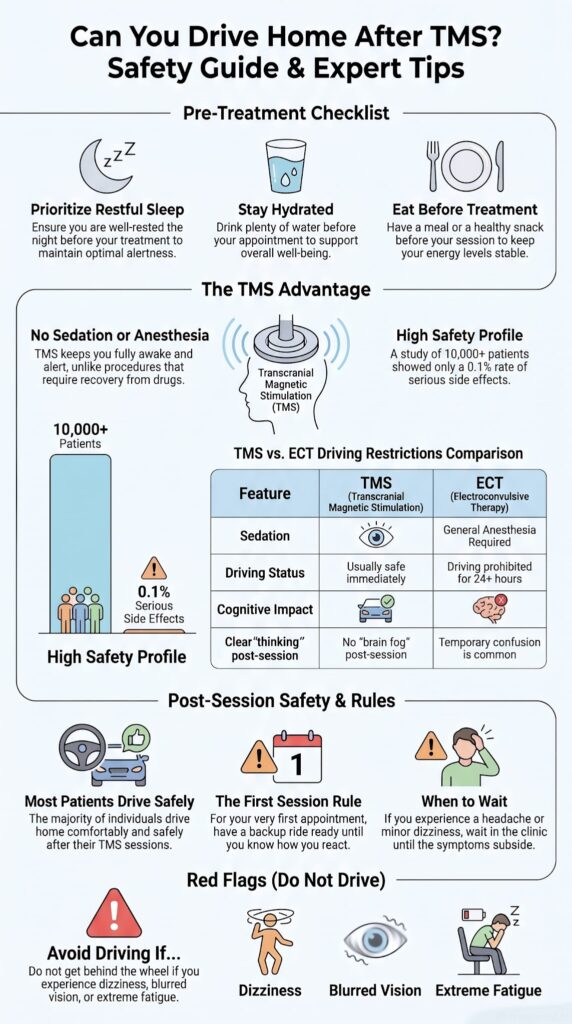
TMS doesn’t need recovery time because you stay awake the whole time. No anesthesia. No sleepy pills. Nothing that makes you “out of it.”
Stanford Medicine says most people just get up and go right back to their normal day after each session.
Inside the Treatment Session
- The setup: A doctor or tech places a special coil against your head.
- The mechanism: That coil sends magnetic pulses through your scalp and skull.
- The target: These pulses gently stimulate brain cells that help control mood.
- The state: They don’t mess with your consciousness, you’re fully aware the whole time.
Unlike treatments where you get IV meds or have to be watched for hours, TMS is done in a regular outpatient clinic. Each session is usually under an hour. After that, you can head to work, school, or home, no waiting around.
That’s a big reason why TMS has become a popular option for people with depression who haven’t had much luck with regular antidepressants. It’s simple, safe, and doesn’t eat up your whole day.
How does TMS work?
One of the most common questions I get is: “How do the magnetic pulses actually reach my brain?” The physics is elegant: magnetic fields pass through skin, fat, muscle, and bone without being absorbed or significantly scattered. Unlike ultrasound (which bounces off bone) or X-rays (which are absorbed by bone), magnetic fields are transparent to the skull. The pulses generate small electrical currents in the brain tissue itself, specifically in the cells of the superficial cerebral cortex.
What makes this approach particularly interesting is its mechanism. Rather than flooding the entire brain with a chemical (like antidepressants do globally), or causing a generalized seizure (like ECT), TMS creates a focused, localized effect.
One of my patients described it perfectly: “It’s like my brain is getting a workout at the gym, but only the part that needs strengthening.” That’s not scientifically precise, but it captures the essence: targeted neural activation that promotes adaptive changes without widespread disruption. There are no needles, no surgery, and no implants. Magnetic pulses stimulate targeted brain cells while you’re awake and talking the whole time.
Key Things to Know
- Zero Sedation: No anesthesia, no sedation, and no groggy “twilight” state.
- No Systemic Meds: No new drugs or chemicals are introduced into your body during the session.
- No “Come Down” Period: Because there are no drugs to process, there is no chemical hangover to clear.
- Clinic-Based Care: It’s performed entirely in a comfortable clinic setting, not an operating room or hospital.
Because you stay alert, you can usually drive yourself home right after, unless you get a headache or feel dizzy, then you should wait. Your doctor will check ahead of time if you have any metal or electronic devices in your body (like a pacemaker). Those could make TMS unsafe, so they’ll plan something else if needed.
What happens right after treatment?
Most people just sit up, walk out, and get on with their day. Some go straight back to work, some go to a meeting, and some hit the gym or run errands. Mayo Clinic says that’s totally normal; TMS doesn’t fog your brain or make you groggy.
Post-Session Care Guidelines
- Listen to your body: Do what feels right for you. If your head is pounding or you feel woozy, don’t get straight behind the wheel.
- Give it a few minutes: While waiting in the lobby is not required, it is a practical option if you wish to ensure any initial mild sensations pass comfortably before you start your drive.
- Keep your team updated: At Weston Psychological Associates, we always go over what to expect, talk about possible side effects, and tell patients to call us if anything feels off.
- Communicate for comfort: Sharing how you feel allows us to easily adjust the device settings and placement as needed during your treatment course.
When Should You Avoid Driving After TMS?
After treating hundreds of patients, I can tell you that the “most people feel fine” statistic needs context. Yes, about 70% to 80% of our patients drive themselves home without issues, they are alert, focused, and perfectly capable behind the wheel.
But we have noticed patterns: patients who are sleep-deprived (which is incredibly common with depression) tend to feel more fatigued after sessions. Patients on certain medications may experience more pronounced lightheadedness.
And interestingly, we have observed that patients who have anxiety about the treatment itself often feel more symptomatic afterward. This is not because of the magnetic pulses, but because of the body’s natural stress response. One patient told me: “I was so worried about driving that I made myself dizzy.” The treatment itself wasn’t the problem, her anxiety was. That is why we now spend 10 extra minutes with first-timers just talking through the experience before they leave.
Ultimately, driving depends entirely on how you feel afterward. Some common side effects of Transcranial Magnetic Stimulation (TMS) are mild headaches, lightheadedness, scalp tingling, or face twitching. These usually go away quickly. But if they hang around, they could mess with your ability to pay attention, react fast, or control the car. And that is when driving becomes a bad idea.
How You Feel After Treatment: Is It Safe to Drive?
| How You Feel After Treatment | Is It Safe to Drive? | Recommended Action |
| No symptoms and fully alert | ✅ Yes | Drive home as usual. |
| Mild headache | ✅ Usually | Drive only if the headache does not affect your focus or comfort. |
| Mild scalp tenderness | ✅ Usually | Driving is generally safe if you feel alert. |
| Lightheadedness or dizziness | ❌ No | Wait until symptoms completely resolve before driving. |
| Blurred vision | ❌ No | Do not drive. Contact your healthcare provider if symptoms persist. |
| Excessive fatigue or difficulty concentrating | ❌ No | Arrange alternative transportation and rest before driving. |
Which Symptoms Mean “Do Not Drive”?
You should not get behind the wheel if you experience any of the following symptoms:
- Dizziness or faintness: Feeling lightheaded, spinning, or like you might pass out.
- Focus-limiting headaches: A headache intense enough that it distracts you from the road.
- Visual changes: Blurry, fuzzy, or otherwise weird vision.
- Extreme tiredness: Heavy exhaustion that goes way beyond just needing a quick nap.
- Brain fog: Feeling slow, spaced out, or unable to make quick decisions.
- Physical limitations: Any symptom that makes turning the wheel, braking, or checking your mirrors feel difficult.
These symptoms are usually temporary and will go away on their own. However, they are still a clear signal to stay out of the driver’s seat.
What to Do Instead
If you do not feel 100% right after your TMS session, play it safe and take these steps:
- Rest in the clinic: Chill in the waiting room for 10 to 15 minutes to see if the symptoms clear up.
- Call for backup: Reach out to a family member or friend to come pick you up.
- Use a ride service: Order a rideshare (like Uber or Lyft) or call a local taxi.
- Contact your doctor: Call your provider if your symptoms start getting worse or last for more than an hour.
💡 Pro Tip: For your very first session, set up a backup ride ahead of time just in case. It completely removes the stress of guessing how your body will react. If you feel great afterward, you can always cancel it!
Pre-Treatment Checklist: Sleep, Hydration, and Meals
Before you head to each appointment, take a quick inventory of how you are feeling overall. The following factors can heavily influence how your body handles TMS:
- Sleep: Did you get a decent night’s rest, or are you running on empty?
- Hydration: Have you had enough water today?
- Nutrition: Have you eaten a solid meal recently?
If you are already tired, dehydrated, or hungry before your session, you are much more likely to experience post-treatment symptoms that can make driving unsafe. Taking care of these basics beforehand makes a massive difference in how you feel when you walk out the door.
What Side Effects Could Affect Driving?
Most TMS side effects are mild and do not last long. They usually don’t stop you from doing your normal daily activities. In studies, about 40% to 50% of people experience a mild headache during treatment. Scalp soreness is also pretty common, especially during the first week.
Here is what we have documented over four years of providing TMS: side effects typically peak during the first week and diminish significantly by week two. In our practice, about 85% of patients report that headaches become mild or disappear entirely after session five or six. What surprises many patients is that side effects aren’t uniform, some experience scalp tenderness but no headache, while others have mild fatigue but no discomfort at the treatment site.
One patient, a 45-year-old teacher, shared that her mild headache during the first week actually became a useful signal. She knew the treatment was “working” because she felt something. By week three, she had no side effects at all and was driving herself to and from sessions without a second thought.
We have seen this pattern enough to confidently tell patients: give it a week, and your body will likely adjust. That is why most people can drive home after TMS, as long as they feel okay. But you should always check in with how you are feeling. Use this guide below to help you decide.
Post-Treatment Side Effects Guide
| Side Effect | Is It Usually Safe to Drive? | Recommended Action |
| Mild headache | ✅ Usually | Drive only if the headache is mild and does not affect your focus or comfort. |
| Mild scalp tenderness | ✅ Yes | Driving is generally safe if you feel alert and comfortable. |
| Face twitching during treatment | ✅ Yes (after treatment ends) | Wait until the twitching has completely stopped before driving. |
| Lightheadedness | ❌ No | Wait until the sensation completely resolves before getting behind the wheel. |
| Excessive tiredness | ❌ No | Rest until you feel fully awake and alert before driving. |
| Blurred or unusual vision | ❌ No | Do not drive. Contact your healthcare provider if symptoms persist or worsen. |
When to Hold Off on Driving
While the table gives a quick overview, it helps to understand exactly why certain symptoms mean you should hand over the keys.
High-Risk Symptoms to Watch For:
- Cognitive and Visual Disruptions: Blurred vision or unusual visual changes make it incredibly difficult to judge distances or see pedestrians. Similarly, brain fog or extreme fatigue can slow down your reaction times when braking.
- Physical Discomfort: If a headache is throbbing heavily or lightheadedness makes you feel unsteady, your focus is split. You cannot safely monitor the road if you are actively fighting off dizziness.
- Lingering Twitches: While minor muscle twitching during the session is normal, you should never start the car until your face and eye muscles are completely relaxed.
If your side effects get worse or last longer than expected, don’t guess—give your treatment team a call.
In a recent analysis by the Oxford Health NHS Foundation Trust
“Most people can continue normal activities after TMS, and there are no formal driving restrictions. However, Oxford Health recommends not driving on the first day of treatment to see how your body responds, and advises that you should not drive if you feel unsafe to do so..” – Oxford Health NHS Foundation Trust
Is Your First TMS Session Different?
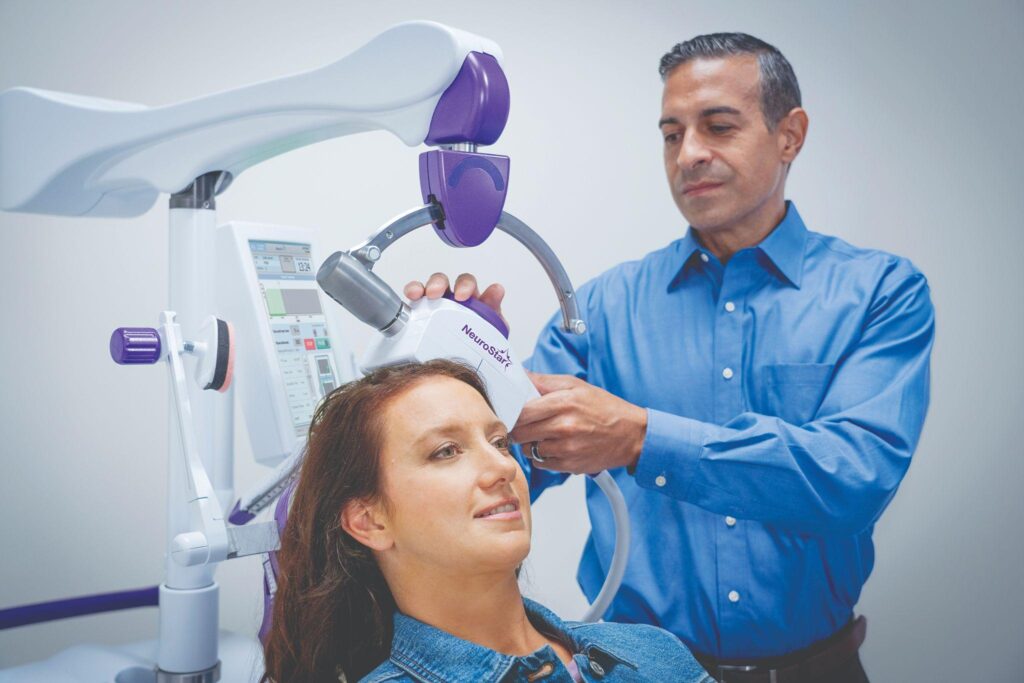
Yes. The motor threshold mapping is actually one of the most fascinating parts of the process, and the most individualized. I’ve had patients who need very low stimulation (like 55% of the machine’s capacity) and others who need nearly double that. One memorable case: a 65-year-old retired engineer with particularly thick skull bone required significantly higher settings than a younger patient with average bone density.
This isn’t just technical detail; it directly affects how you’ll feel post-treatment. Patients who require higher stimulation often experience more scalp tenderness initially. We’ve learned to set realistic expectations: “Based on your mapping today, you’re in the moderate range, which means you might feel some mild tapping sensation but should be fine to drive.” That kind of personalized guidance comes from doing this hundreds of times.
Since you don’t know yet how your body will react, most people still can drive afterward. But it’s a good idea to have someone else drive you home the first time, just to be safe.
Why Get a Ride the First Time?
- The unknown reaction: You don’t know yet how you’ll feel.
- Time commitment: The appointment is longer than usual.
- The fatigue factor: Feeling nervous about something new can wear you out.
- Peace of mind: Not worrying about driving helps you relax and focus on treatment.
Most people find that after a few sessions, TMS just becomes part of their routine.
What to Watch For After Your First Few Sessions
Pay attention to:
- How alert you feel
- How bad your headache is (if any)
- If you can focus clearly
- How comfortable you feel during your normal commute
These clues will help you decide if it’s still safe for you to drive after each session.
Why Do Some Clinics Recommend Not Driving?
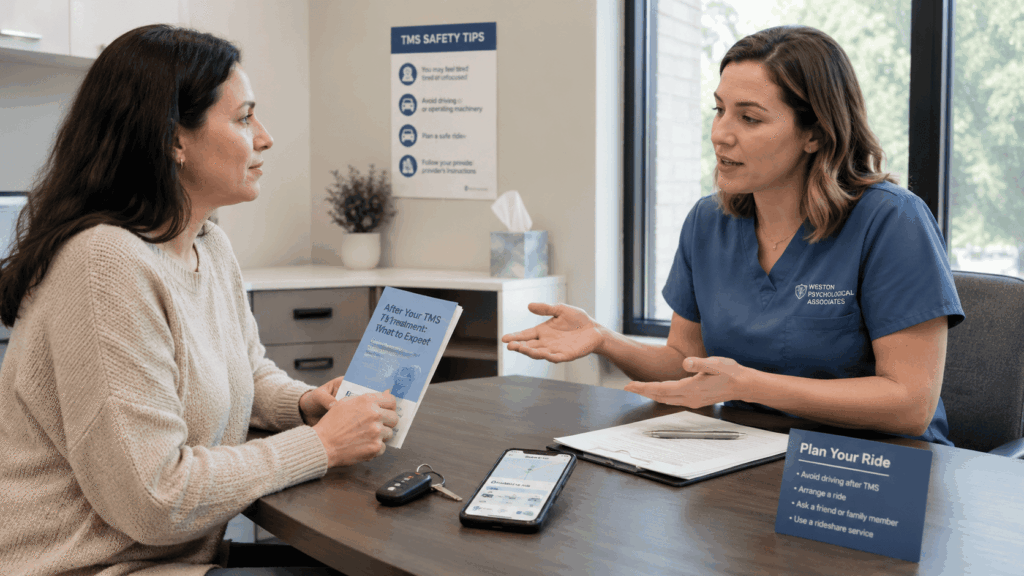
Doctors don’t always give the same advice about driving after TMS because they look at your specific health, not just a one-size-fits-all rule.
Key Factors Doctors Consider:
- Medical History: Have you ever had seizures or passed out?
- Current Medications: What medicines are you taking right now?
- Pre-existing Symptoms: Do you get dizzy often?
- Logistics: How far do you have to drive home?
- Overall Health: Do you have other health issues (like heart problems or low blood sugar)?
- Early Reactions: How did you feel after your first few treatments?
Recommendations against driving are a precautionary measure tailored to your specific risk factors, not a reflection on TMS’s inherent safety. At Weston Psychological Associates, we check your whole health story before we say if it’s safe for you to drive home after treatment.
What Do Patients Say About Driving After TMS?
Most patients say they feel fine and drive home with no problem. But some do feel a little tired or get a mild headache after treatment. On online forums and in conversations, people usually talk about practical stuff, not scary safety issues.
Common Real-World Patient Experiences:
- They drive straight home after their session.
- They go right back to work.
- They feel totally normal after the appointment.
- Sometimes they need a short rest after the first few sessions.
One big thing that comes up a lot: commute time. Even patients who feel great after TMS sometimes say a long drive wears them out more than a short one, especially in the first week.
The main takeaway from real patients is this: Don’t guess how you’ll feel. Pay attention to your own body and symptoms, and make your driving decision based on that.
How Does TMS Compare With Ketamine or ECT?
Unlike ECT (electroconvulsive therapy) and most ketamine treatments, TMS (transcranial magnetic stimulation) usually doesn’t require you to have someone drive you home. That’s because you stay wide awake during the whole session.
The main reason isn’t where the treatment works in your brain, it’s about sedation (medication that makes you sleepy or out of it).
| Treatment | Do You Usually Need a Driver? | Why? |
| TMS (Transcranial Magnetic Stimulation) | Usually No | No anesthesia or sedation is used, so most patients remain fully alert after treatment. |
| ECT (Electroconvulsive Therapy) | Yes | General anesthesia and a brief recovery period make driving unsafe on the day of treatment. |
| Ketamine IV Therapy | Often Yes | Temporary side effects such as dizziness, drowsiness, or impaired judgment may affect driving ability. |
| Esketamine Nasal Spray | Yes | Patients must arrange transportation because post-treatment monitoring and driving restrictions are required. |
Why the Post-Treatment Rules Differ
- Anesthesia Use: ECT uses general anesthesia, meaning you’re completely asleep during the procedure and groggy afterward.
- Cognitive Side Effects: Ketamine treatments often cause blurry vision, dizziness, or a temporary “spacey” feeling that makes operating heavy machinery dangerous.
- Zero Sedation: TMS, on the other hand, uses focused magnetic pulses and doesn’t use drugs that affect your thinking or alertness.
Because of these differences, most TMS patients can head right back to work, school, or their normal daily routine immediately after a session.
How Can You Make Daily TMS Travel Easier?
Since TMS usually means going to the clinic about five times a week for several weeks, understanding the time frame for TMS session and planning your travel ahead of time can save you a lot of headaches.
Smart Strategies for Your Daily Commute
- Optimize Your Timing: Book your appointment at a time when traffic is lighter to reduce transit stress.
- Stay Local: If you have a long drive, try to find a clinic closer to home or work.
- Have a Plan B: Keep a backup option ready, like a friend, ride-share app, or public transit route, just in case you don’t feel like driving.
Prep Tips for Before and After Your Session
- Hydrate and Fuel: Drink plenty of water during the day (but not right before if it makes you uncomfortable) and eat normally unless your doctor tells you otherwise.
- Buffer Your Schedule: Give yourself 5-10 minutes to chill out in the waiting room after treatment before rushing off.
- Keep People in the Loop: Let your family know your schedule so they can step in and help if your calendar gets chaotic.
A little planning goes a long way. It helps you stick with your treatment, and staying consistent is one of the absolute best ways to get great results.
How Can Weston Psychological Associates Help You Plan Safe TMS Treatment?
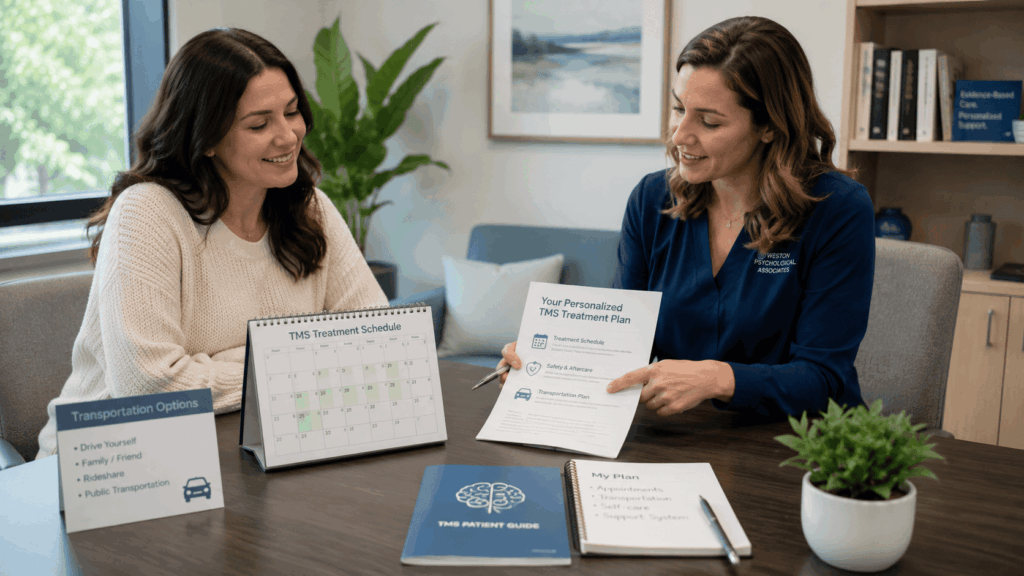
Safe transportation planning starts before you ever come in for your first treatment.
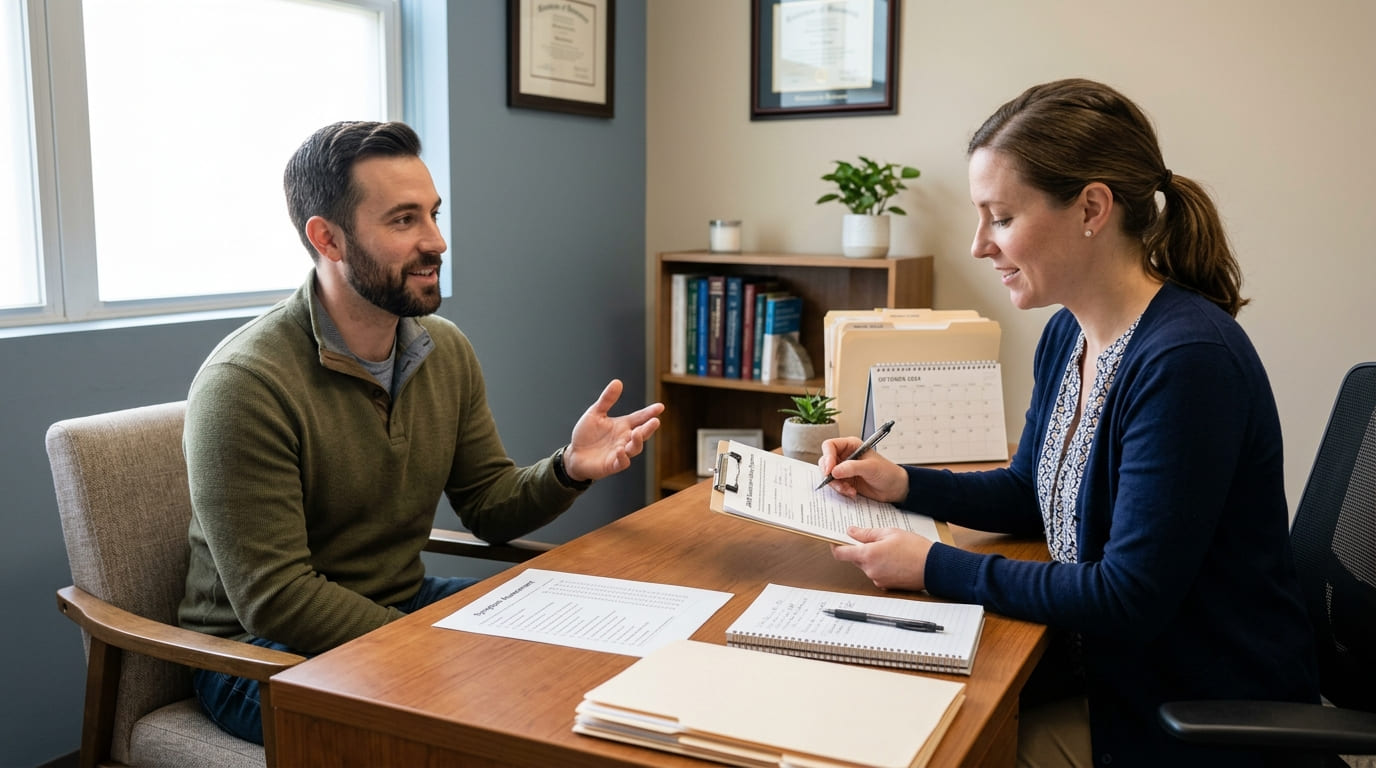
At Weston Psychological Associates, we don’t just turn on the machine and go. Before we start NeuroStar TMS (which is FDA-Cleared), we take time to go over your health history, any medicines you’re taking, what you hope to get out of treatment, and anything that might make TMS riskier for you personally. Patients frequently ask is TMS Therapy safe? and we address this thoroughly during the evaluation process.
We use NeuroStar TMS for adults with:
- Major depressive disorder (MDD)
- Obsessive-compulsive disorder (OCD)
- Anxious depression, but only when we think it’s a good fit clinically
Our Thorough Safety Screening Process
Our safety screening process is comprehensive, and it’s based on years of experience identifying patients who aren’t good candidates. Beyond the obvious contraindications like pacemakers, cochlear implants, or any ferromagnetic metal in the head, we’ve actually referred two patients for dental work to remove metal fillings before starting TMS, we’ve learned to screen for less obvious issues.
For example, we carefully evaluate for:
- History of seizures or epilepsy (even in childhood)
- Recent skull fractures or cranial surgeries
- Certain migraine medications that lower the seizure threshold
- History of brain injury or stroke
- Pregnancy status (the long-term effects aren’t well-studied)
We once had a patient with undiagnosed bipolar disorder who was referred to us for depression; our careful screening identified the pattern, and we referred them to a specialist instead. That’s the kind of thoroughness that comes from clinical experience. Because of this, we don’t use TMS as a first try for mild depression, or for people who are already doing well on their current medications. Every plan is made just for you.
Questions We Help You Answer
We really want you to feel comfortable, so we encourage you to ask questions like:
- Can I drive myself home after my very first session?
- What symptoms should I keep an eye out for?
- When should I call the clinic, like, what’s urgent?
- Does something in my medical history change how I should get to and from appointments?
- Can I go straight back to work after treatment, or should I take it easy?
We answer these kinds of questions honestly, so you and your family can plan ahead. Our goal is that you start treatment feeling informed, safe, and not worried about the little things, like how you’re getting home.
Can You Drive Home After TMS? Final Takeaways
Most people can drive home after TMS because the treatment doesn’t cause sedation or require recovery time. If you feel fine after your appointment, you can usually get back to work or your normal routine right away. If you notice a headache, feel lightheaded, or have unusual symptoms, wait until you feel better before driving and follow your provider’s advice.
If you’re thinking about TMS, Weston Psychological Associates can help you understand whether it’s the right fit for your needs. You’ll get clear guidance before every session, so you know what to expect and can plan with confidence. Ready to take the next step? Schedule a TMS consultation with Weston Psychological Associates to learn whether FDA-Cleared NeuroStar TMS is right for your treatment goals.
FAQ
Can you drive after TMS if you feel completely normal?
Most people can drive after TMS because transcranial magnetic stimulation is a non-invasive brain stimulation treatment that does not require sedation. If you feel alert and have no concerning symptoms, driving after TMS is generally considered appropriate. However, if you experience a headache, fatigue, or lightheadedness after TMS, wait until the symptoms resolve and follow your provider’s recommendations.
Is it safe to drive after TMS if you have mild side effects?
Whether it is safe to drive after TMS depends on your symptoms. Mild TMS side effects, including a headache, fatigue, or lightheadedness, may reduce your comfort while driving. If you do not feel fully alert, postpone post TMS driving until you recover. Following TMS safety guidelines helps you make a safer decision before getting behind the wheel.
Can I drive myself after TMS for my first appointment?
Many people can drive themselves after TMS because outpatient TMS treatment does not involve sedation or a lengthy recovery period. However, your first session may help you understand how your body responds to treatment. If you are unsure, arrange TMS appointment transportation for your first visit and decide about driving home after TMS afterward.
Can I work after TMS and resume daily activities right away?
Most people return to work after TMS and resume normal daily activities on the same day. Because no sedation TMS is involved, immediate recovery after TMS is usually quick. Before returning to work, make sure your alertness, cognition, and overall comfort have returned to normal so you can complete your usual responsibilities safely.
Do you need a ride after TMS if you are unsure how you will feel?
You do not always need a ride after TMS, but arranging transportation is a practical option if you are concerned about possible side effects. If you experience lightheadedness after TMS or do not feel comfortable driving, ask someone to take you home or use another transportation option. Your safety should always come before convenience.