
Can you do TMS therapy while on antidepressants? Yes, you can safely receive TMS therapy while taking your prescribed antidepressants, and most patients do. In fact, staying on your current medication often provides a steady foundation while transcranial magnetic stimulation works to stimulate mood-regulating circuits in your brain.
Your psychiatrist will evaluate your specific prescriptions, dosage stability, and medical history to ensure there are no heightened seizure risks before you begin. You should never stop or alter your medication dose independently. At Weston Psychological Associates, our team coordinates directly with your prescribing provider to ensure both treatments support your recovery safely.
Key Takeaways
- You can usually continue antidepressants during TMS.
- Some medications require closer review before TMS.
- TMS does not guarantee you can stop medication.
Can You Receive TMS Therapy While Taking Antidepressants?
Yes, most of the time. If TMS is a good fit for you, you can usually stay on your antidepressant while you get it. Taking antidepressants does not automatically make you ineligible for TMS.
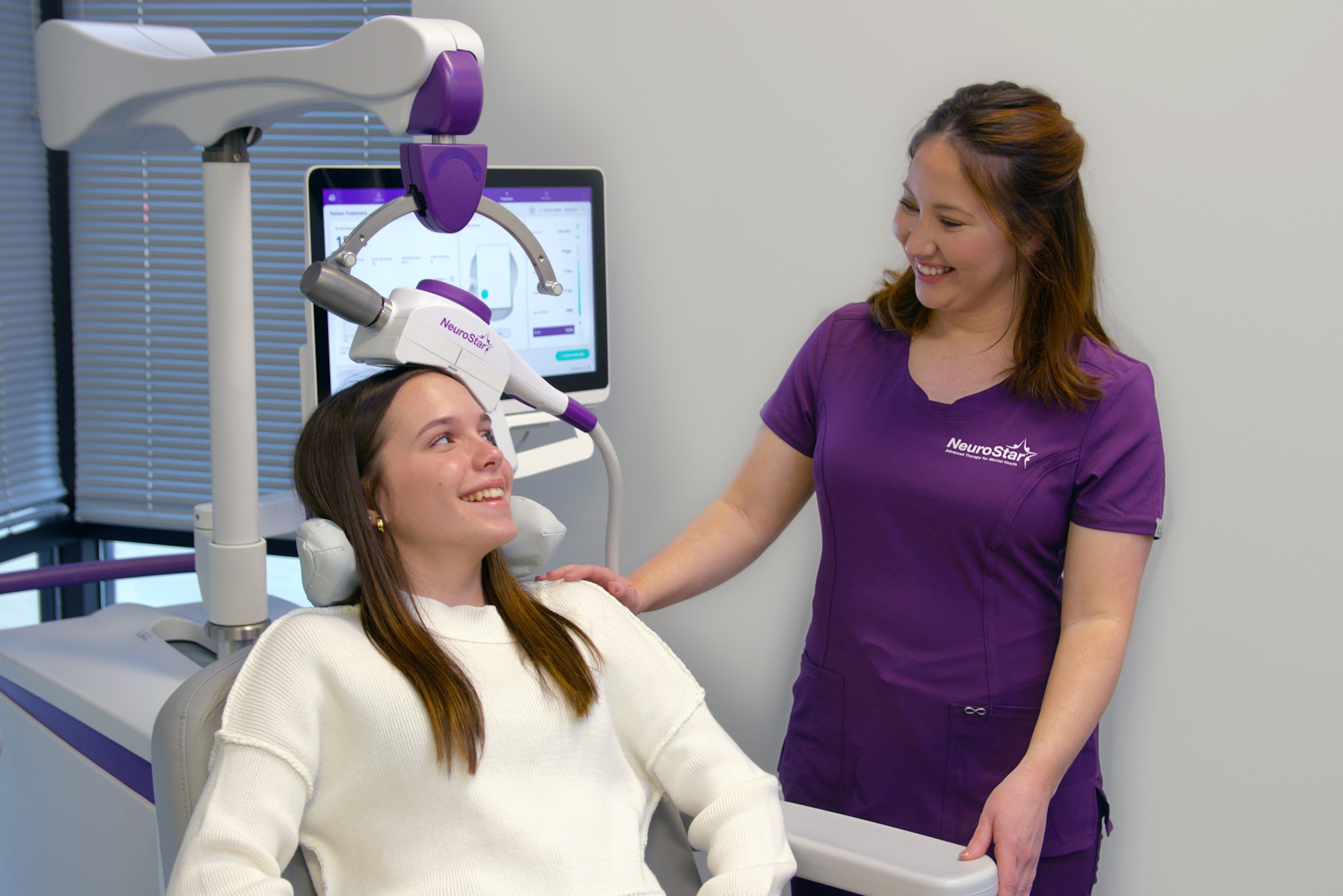
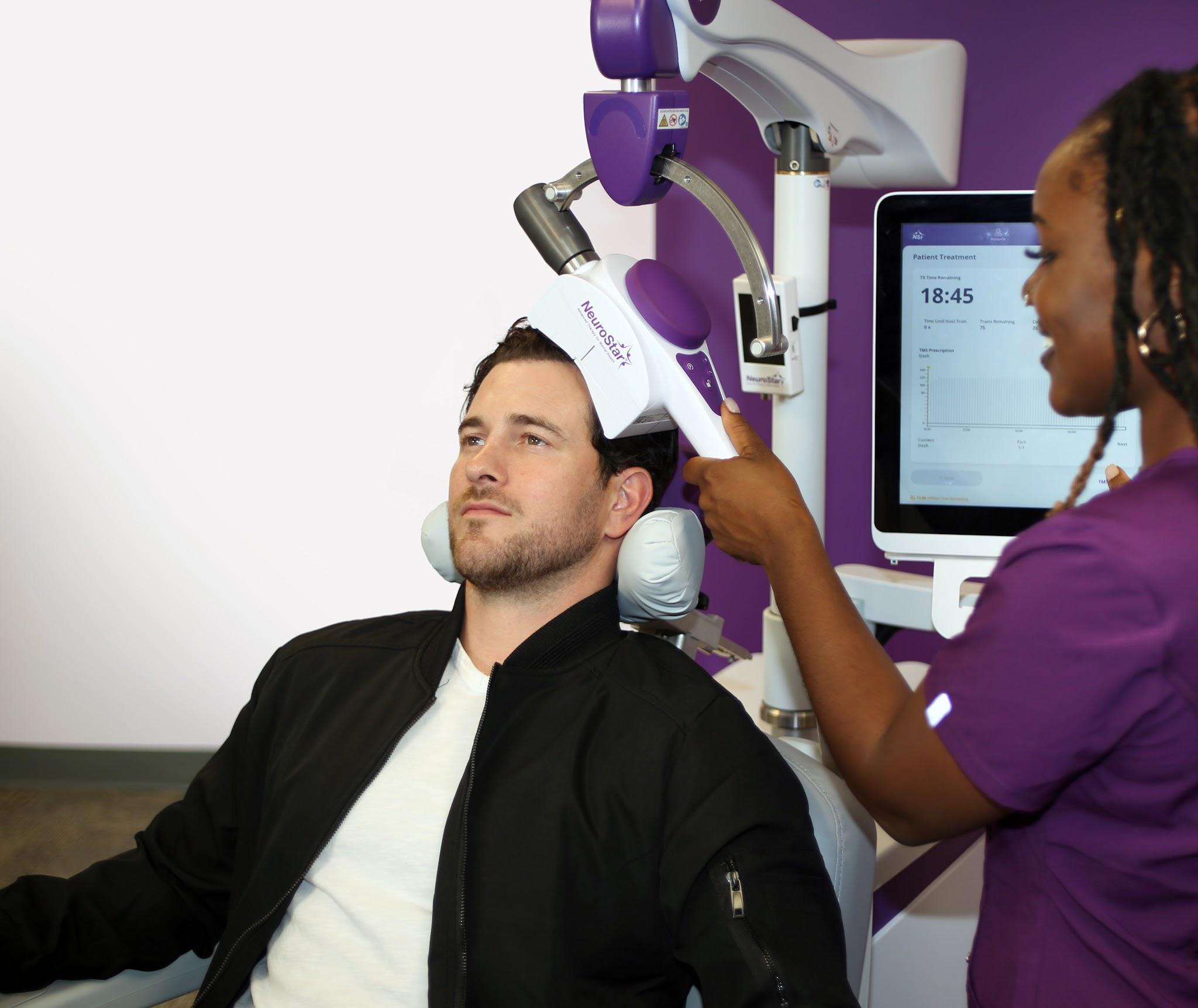
TMS stands for transcranial magnetic stimulation. It sends magnetic pulses into parts of the brain that help control mood. For depression, we usually treat the left dorsolateral prefrontal cortex, an area near the front of the brain that plays a role in mood and thinking.
Your psychiatrist might bring up TMS if your medication hasn’t helped enough. Or if your symptoms have stuck around after other treatments. Your psychiatrist may consider TMS when other treatments have not provided sufficient symptom relief.
Continuing antidepressants during TMS may offer several advantages:
- Ongoing medication treatment: Your antidepressant may continue to help manage symptoms during the TMS course.
- An additional treatment option: TMS may help when medication alone has not provided sufficient relief.
- Coordinated monitoring: Your clinician can track your symptoms and review your treatment plan as needed.
A 2019 study examined the relationship between concomitant medication use and clinical outcomes during TMS. Its findings support assessing each patient’s medication regimen individually rather than assuming that all antidepressants must be discontinued before treatment.
Read the study: Concomitant Medication Use and Clinical Outcome of Repetitive TMS.
Your psychiatrist will go over your health history before setting a plan. If you take several psychiatric medications, make sure your TMS provider and the person who prescribes your medicine are talking. That matters more than most people think.
Should You Stop Antidepressants Before TMS?

Usually not. Many patients stay on their current medication through the first full course of TMS, as long as their psychiatrist says it’s okay.
As noted by Mayo Clinic Connect
“The meds are continued during TMS. It is thought that the stimulation could cause a positive synergistic response in the brain.” – Mayo Clinic Connect
Keeping medication doses stable during TMS may help clinicians assess treatment response. However, a medication change may still be necessary for clinical reasons. Your prescribing clinician and TMS provider should coordinate any adjustments and monitor your symptoms.
Quitting an antidepressant suddenly can cause dizziness, nausea, poor sleep, and mood swings. Your depression may come back too.
Before you change anything, ask your psychiatrist:
- Should my dose stay the same during TMS?
- Do I need closer checkups because my medication changed recently?
- Could side effects or withdrawal symptoms get in the way of treatment?
- How often will we review my medications as my symptoms change?
Sometimes there’s a clear medical reason to adjust a dose, and your prescriber will tell you. But never stop, lower, or raise your antidepressant on your own. Not even a little.
Which Antidepressants and Other Medications Need Extra Review?
Many patients receive TMS while taking psychiatric medications. Before treatment, your clinician should review your prescription drugs, doses, recent medication changes, and other factors that may affect seizure risk or treatment planning.
The table below lists common medications and what your clinician may check.
| Medication or class | What your psychiatrist may review |
| Bupropion (Wellbutrin) | Your dose, any history of seizures, and other things that raise seizure risk. |
| Imipramine | Your dose, your other medications, and your own seizure risk factors. |
| SSRIs, such as escitalopram (Lexapro) | Your dose, how stable you’ve been on it, and other health factors. |
| SNRIs, such as desvenlafaxine (Pristiq) | Recent dose changes, your medication history, and your other prescriptions. |
| Benzodiazepines | Your dose, why you take it, and how it could affect your treatment plan. |
| Stimulants | The specific medication, your dose, and your own risk factors. |
| Antipsychotics and mood stabilizers | Your diagnosis, how your medications work together, and your treatment goals. |
Taking medications such as bupropion or stimulants does not automatically disqualify you from receiving TMS. During your initial assessment, your clinician will review your medication doses, recent changes, medical history, and other factors that may affect seizure risk. This information helps determine whether TMS is appropriate and whether additional precautions are needed.
What should you tell your TMS psychiatrist?
Before your first session, bring a full list of:
- Prescription medications, including any recent dose changes.
- Medicines you buy without a prescription, plus any supplements.
- Alcohol or drug use.
- Past seizures or nerve and brain conditions.
- Bad reactions you’ve had to psychiatric medications.
And one more thing. If another clinician recently started a new medication or changed one of your doses, tell your TMS provider. A thorough medication review can help your care team identify potential interactions, assess seizure risk, and determine whether additional precautions are needed. This review may also involve psychiatric medication evaluation and management to coordinate treatment decisions with your prescribing clinician.
Can Combining TMS With Antidepressants Improve Depression Outcomes?

Combining TMS with antidepressants may improve symptoms for some people with major depressive disorder, particularly when medication alone has not provided sufficient relief. However, treatment response varies, and combining the two does not guarantee better results for every patient.
Antidepressants and TMS affect brain function through different mechanisms. Antidepressants influence neurotransmitter signaling, while TMS uses magnetic pulses to stimulate targeted brain regions involved in mood regulation. A clinician can assess whether combining the treatments is appropriate for your situation. In our clinic, we observe that this dual mechanism often helps bridge the gap for patients who hit a plateau on medication alone.
According to a systematic review published in the National Institutes of Health (NIH) database:
“Our primary objective was to summarize evidence from studies that rigorously combined TMS and antidepressants in the treatment of MDD. Hence, we hypothesized that antidepressants combined with active TMS would show a greater reduction in depressive symptoms than sham TMS combined with antidepressants.” – NIH (PMC12044610)
This dual-modality approach highlights how physical stimulation and chemical treatments can work cooperatively for individuals with treatment-resistant depression.
TMS is a well-established treatment for major depression in the right patients. This includes some people whose symptoms stayed even after other treatments.
How well it works for you depends on:
- How severe your depression is and how long you have had it.
- Which antidepressants you have tried and how well they worked.
- The TMS settings and the spot in the brain that is treated.
- Whether you can get to all of your sessions.
- Any other mental health or medical conditions you have.
Although research supports combining TMS with antidepressants in some circumstances, the degree of benefit depends on the treatment protocol and patient population. Discuss the evidence and expected outcomes with your psychiatrist. Your psychiatrist will track your symptoms during treatment to see if it is helping you.
We provide TMS in Weston FL It is FDA-cleared for major depression and some other conditions. Your clinician can tell you if it fits your diagnosis and your care plan.
What Are the Risks of Combining TMS With Antidepressants?
TMS is usually well tolerated, but it does have risks. Your care team will look at the side effects of TMS and the risks of your medicines.
Common TMS side effects include:
- Discomfort on the scalp during treatment.
- Headaches that do not last long.
- Twitching in the face muscles while the pulses are on.
Scalp discomfort and headaches are generally temporary, although the severity and duration of side effects vary.
A seizure is a rare but serious risk of TMS. Some medicines, brain conditions, and other health factors can raise that risk. That is why your psychiatrist needs to go over your medical history and your medicines before you start.
You can read more in the U.S. Department of Veterans Affairs’ TMS Clinical Determinations guidance.
Which medical conditions need a closer look?
Tell your psychiatrist if you have:
- Had a seizure in the past, or have a condition that makes seizures more likely.
- Bipolar disorder, or have had times when your mood was unusually high.
- Psychosis or other symptoms that need care from more than one provider.
- A medical device implanted in your body, or metal near your head.
- Recently changed any of your medicines.
Some implants, such as certain cochlear implants and deep brain stimulators, can make TMS unsafe. Whether you can have TMS depends on the exact device, where it sits, and the maker’s safety rules.
Your psychiatrist will assess whether TMS is appropriate for your diagnosis and whether its potential benefits outweigh the risks in your individual case. Because eligibility varies by condition and individual circumstances, the conditions treated with NeuroStar TMS therapy can provide context for discussing your options with your clinician.
Can You Reduce or Stop Antidepressants After TMS?

Maybe. Finishing TMS does not mean you can stop your antidepressant. The answer depends on how much you improved, how long the improvement lasts, and your past history with depression.
Some people stay on their antidepressant after TMS because it still helps them. Others lower their dose with their psychiatrist’s guidance.
Before suggesting a change, your psychiatrist may ask:
- Have your depression symptoms improved a lot?
- How long have you felt better?
- Did your depression come back in the past when you stopped medicine?
- Do you still have some symptoms?
- Are therapy or other treatments helping you stay well?
Even if your depression improves after TMS, do not stop your antidepressant abruptly. If reducing the dose is appropriate, your prescribing clinician can develop an individualized tapering plan and monitor you for withdrawal symptoms or a return of depression.
Do not stop your medicine just because you feel better after TMS. Stopping too fast can cause withdrawal symptoms or let your depression return. Your prescribing clinician should oversee any change and work with your TMS team.
Does TMS Replace Antidepressants Completely?
Not always. TMS can help with depression, but it doesn’t promise you’ll be able to stop your medicine. Whether you still need it depends on how well TMS works for you, how severe your depression has been, which medicines you’ve tried before, and what keeps you feeling steady.
| Treatment Approach | When It May Be Appropriate | Next Steps |
| TMS combined with antidepressants | Medication alone has not provided sufficient symptom relief. | Continue both treatments under your psychiatrist’s supervision. |
| TMS followed by continued medication | Your antidepressant helps maintain symptom improvement. | Continue medication as recommended by your prescribing clinician. |
| TMS followed by a gradual medication taper | Your symptoms have improved, and your psychiatrist determines that reducing medication is appropriate. | Follow an individualized tapering plan under medical supervision. |
| Additional or maintenance TMS | Symptoms persist or return after the initial treatment course. | Discuss further treatment options with your psychiatrist. |
Every person is different. Some stay well after one course of TMS. Others still need medicine, talk therapy, more TMS, or some mix of these. And that’s okay.
The goal is to improve your symptoms and daily functioning. Your ongoing treatment plan should reflect your response to TMS, your medical history, and your clinician’s recommendations about continuing or adjusting medication.
How Long Does TMS Treatment Take, and Will You Need Maintenance?
TMS is given in short visits spread over several weeks. Your schedule depends on your diagnosis, the machine used, and the plan your doctor recommends.
Most people come in on weekdays for several weeks. Treatment schedules vary by device, protocol, and clinical needs. Your provider should explain the expected session length, frequency of visits, and total course duration before treatment begins.
When your first course ends, your psychiatrist checks how your symptoms have changed, how you handled the treatment, and what care you need next.
Your plan for what comes next may include:
- Checking your progress: Your doctor looks at how your depression and your daily life have changed.
- Reviewing your medication: You decide together whether to keep your antidepressant or have your doctor adjust it carefully.
- Watching for symptoms to return: Your care team helps you learn the early warning signs.
- Considering more treatment: Some people do well with extra or maintenance TMS.
Not everyone needs maintenance TMS. Your psychiatrist can tell you which next steps fit your response and your health history.
Before you finish treatment, ask two things. When will my progress be checked again? And who do I call if my symptoms come back?
What Should You Ask Your TMS Psychiatrist Before Treatment?
Your psychiatrist reviews your medicines to make sure TMS is safe for you and to set realistic treatment goals. Choose a provider who reviews your medications, medical history, and individual risk factors. Knowing what to look for when choosing the right TMS clinic can help you prepare informed questions before your first appointment.
Questions you might ask:
- Should I keep taking each of my antidepressants during TMS?
- Could any of my medicines or health problems raise my chance of a seizure?
- Should my doses stay the same during the first course of treatment?
- Which side effects mean I should call the clinic?
- How will we know if TMS is working?
- If it ever makes sense, when could we lower my medicine?
- What happens if my depression comes back after treatment?
- Will my insurance cover treatment and later visits?
Bring a current list of everything you take. That includes vitamins, supplements, and medicines you buy without a prescription. Also tell your psychiatrist about your health history, any past problems with medicines, and any recent changes in how you feel.
With all of that, your psychiatrist can decide if TMS is a good fit, explain the possible benefits and risks, and build a plan around you.
How Do TMS Costs and Insurance Coverage Affect Treatment?

What you pay for TMS depends on your provider, your treatment plan, your insurance, and how many sessions you get. It can vary a lot.
Insurance coverage may depend on your diagnosis, what treatments you’ve already tried, and whether your plan says TMS is medically necessary. Some plans also require prior authorization. That means your insurance has to approve the treatment before you start. Coverage for extra or maintenance sessions may not match coverage for your first course.
Before you begin, ask your provider:
- What is the total estimated cost, and how much might I pay myself?
- Do I need prior authorization?
- How many sessions will my plan cover?
- Will I need new approval if I need more treatment?
- How could changes to my plan affect what I pay?
Weston Psychological Associates offers NeuroStar TMS at its Florida locations. What your insurance covers depends on your individual plan, diagnosis, and eligibility requirements.
Your provider can help you sort out the costs before treatment starts. Then you know what to expect.
FAQ
Can You Take SSRIs or SNRIs During TMS Therapy?
Yes, many people can continue taking selective serotonin reuptake inhibitors (SSRIs) or serotonin-norepinephrine reuptake inhibitors (SNRIs) during TMS therapy. Before treatment, your psychiatrist will review your antidepressant medication, dosage, medical history, and depression symptoms. Some medications may affect seizure risk, so tell your clinician about every medication you take. Do not change your medication without medical guidance.
Does Taking Multiple Psychiatric Medications Affect TMS Safety?
Taking multiple psychiatric medications does not automatically make you ineligible for TMS therapy. However, medications such as benzodiazepines, antipsychotics, and mood stabilizers may affect treatment planning. Your TMS clinician will review your medication list, potential drug interactions, seizure risk, and other medical factors to determine whether you need additional monitoring or medication adjustments before starting treatment.
Should You Change Your Antidepressant Dose Before Starting TMS?
You do not necessarily need to change your antidepressant dose before starting TMS therapy. Your psychiatrist will review your current dosage, treatment history, and response to medication before recommending any changes. Many patients continue taking antidepressants during repetitive TMS (rTMS). Never stop, start, or change an antidepressant on your own. Discuss any medication adjustments with the clinician managing your TMS treatment.
Can TMS Help If Antidepressants Have Not Worked?
Yes, TMS therapy may help people with major depressive disorder (MDD) who have not experienced enough improvement with antidepressants. Clinicians may recommend it for treatment-resistant depression (TRD) when previous treatments have not provided sufficient relief. However, TMS does not work for everyone, and individual results vary. Your psychiatrist can review your treatment history and determine whether you are a suitable candidate.
Can You Do TMS Therapy While on Antidepressants Safely?
Can you do TMS therapy while on antidepressants safely? Yes, combining TMS therapy with ongoing antidepressant treatment is widely practiced and clinically recognized. Your psychiatrist will perform a comprehensive medication review before your first session to screen for seizure risk factors and verify that your current doses are stable. As long as your treatment is monitored by a qualified clinical team, combining both modalities is considered a safe and standard protocol.